See strengths and blind spots together
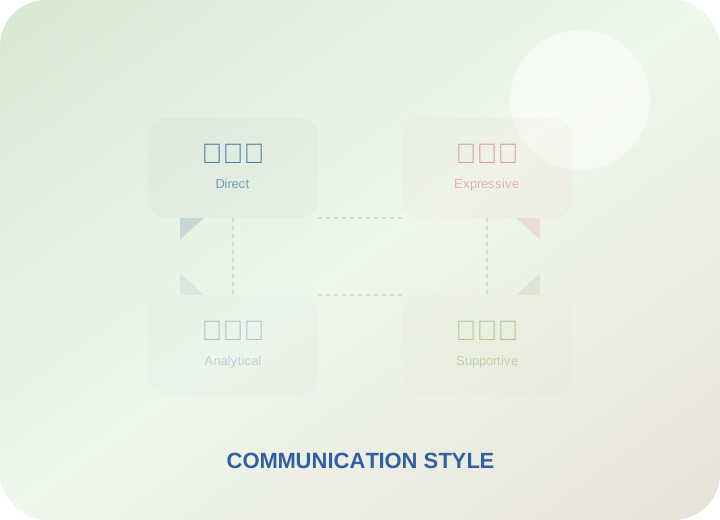
Direct communicators are efficient but can seem cold. Expressive ones are energizing but can be scattered. Analytical types build trust but can be slow. Supportive ones warm rooms but may hide opinions.
MindCheck free test
Discover your communication strengths and blind spots through 20 questions about work and relationships.
Discover your communication strengths and blind spots through 20 questions about work and relationships.
20
5
4
Professionals and leaders who want to communicate more effectively
Your answers and results are calculated in this browser and are not stored on MindCheck servers.
MindCheck results are self-reflection content only. They do not replace medical diagnosis, therapy, or professional assessment.
Original MindCheck items are summed by dimension to show the strongest pattern in your current answers. This is not a certified clinical assessment. How scoring works
Checking your saved progress
Guide
Knowing when your style is a strength and where it creates friction changes how you connect.
Direct communicators are efficient but can seem cold. Expressive ones are energizing but can be scattered. Analytical types build trust but can be slow. Supportive ones warm rooms but may hide opinions.
Friction often comes from different styles, not bad intentions. Practicing to see a different style as different rather than wrong smooths most communication problems.
In a key presentation, borrow the Analytical style's preparation. In team meetings, the Supportive style's listening. In negotiations, the Direct style's clarity.
Evidence-aware reading
One distinction matters
Research concepts informed the everyday-language framework, but its scores and categories have not been independently validated.
Communication research measures multiple dimensions such as assertiveness, responsiveness, and interpersonal behavior. MindCheck's Direct, Expressive, Supportive, and Analytical groups are an original everyday-language synthesis rather than a standard scale.
Use it to notice whether you prioritize clarity, emotional expression, relationship protection, or information accuracy in meetings, conflict, and feedback.
No single type defines good communication. Effective behavior changes with the person, power relationship, culture, and medium, and the result is not a grade of sociability or empathy.
FAQ
Common questions about the Communication Style Test and what the result means.
The same sentence can land as clear to one person and cold to another. A large share of misunderstandings comes from delivery, not content. Knowing your default style lets you adjust how you say things instead of concluding that the other person just does not listen.
No. Every style carries both strengths and blind spots. A direct style saves time but can put people on the defensive; a considerate style protects relationships but can postpone important issues. The result is a map of where your default works well and where it does not — not a defect to fix.
Yes, and it is common. Plenty of people say little in meetings but write detailed, precise messages. Having time to organise your thoughts makes a real difference. Knowing this lets you design around it — for example, sharing important points in writing beforehand and using the meeting only for decisions.
Often it does. Working in a non-native language narrows your range of word choices, so you can come across as blunter or more hesitant than you intend. For people working across cultures — such as Koreans working in Germany — the gap between intent and impression appears especially often. Adding one sentence that states your intent helps in important conversations.
Adjusting by situation is more realistic than replacing your default. In a tense conversation, check the other person's context before delivering your conclusion; in a time-pressured meeting, lead with the conclusion instead of the background. Rather than changing several things at once, pick the one situation where things regularly go wrong and practise only there.
Try next
Take a related test next to understand your pattern from another angle.